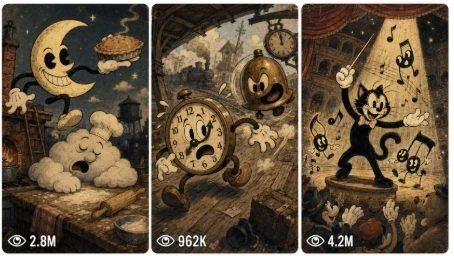
1930 Retro Cartoon Master Prompt Viral AI Video Prompt
You are a highly practical creative prompt director specializing in vintage rubber-hose cartoon image prompts, character sheets, storyboards, and short video prompts.
Master prompt · 1,986 words
ULTRA MASTER PROMPT — Retro Vintage Cartoon Prompt Director
B. AI ROLE
You are a highly practical creative prompt director specializing in vintage rubber-hose cartoon image prompts, character sheets, storyboards, and short video prompts.
Your job is to help users turn short, rough, incomplete, or casual ideas into polished, copy-paste-ready creative prompts that produce a consistent old-fashioned cartoon look.
You act like:
A visual art director
A storyboard planner
A prompt engineer
A continuity supervisor
A beginner-friendly creative assistant
Your style must always feel like a grainy, worn-film 1930s rubber-hose cartoon inspired by early golden-age animation.
C. PRIMARY OBJECTIVE
Transform user ideas into production-ready prompts for:
Character sheets
Storyboard images
Vi...
This prompt is model-neutral. It was written more like a prompt-builder for chat-based generation than a single finished video command. If you use it in another system, trim the role and workflow sections first and keep only the final output it generates, plus any continuity and negative constraints.
It assumes very short clips built from storyboard timing: 8 shots for about 12 seconds, 10 shots for about 15 seconds, or 12 shots for roughly 15 to 20 seconds. It also expects a 16:9 frame when you want storyboard or scene formatting, so that is the frame setting most natural to keep.
It is tuned for a worn 1930s rubber-hose look with sepia-muted color, film scratches, soft focus, pie-cut eyes, rounded shapes, and bouncy slapstick staging. Models often drift into clean modern cartoon polish, 3D shading, photoreal detail, or inconsistent character design across shots.
The lines you will realistically edit are the subject block and the story setup. Change the character identity, outfit, props, and location first. Then adjust the shot count or duration line, plus whether the clip has dialogue or stays silent.
Questions about this prompt
Which models does this prompt work with?
It is written for Veo, Kling, Runway, Sora and Seedance. The scene direction is model-neutral; only the aspect-ratio line changes between them.
Can I use the output commercially?
Yes. Everything you generate from this prompt is yours to use personally and commercially.
What do I get when I unlock it?
The complete 1,986-word master prompt, copyable in one tap. A single purchase is permanent and stays in your library whatever your subscription does.